Drip irrigation delivers water directly to plant root zones with precision and efficiency, making it the most water-conserving irrigation method available. Our drip irrigation design and installation services create targeted watering systems that reduce water use dramatically while promoting healthier plant growth.
Benefits of Drip Irrigation
Drip irrigation offers substantial advantages over traditional spray systems, particularly in planting beds and for individual shrubs and trees. Water is delivered slowly and directly to root zones, minimizing evaporation loss and eliminating overspray waste. This precision reduces water consumption by 30-50% compared to spray irrigation while often producing better plant growth.
Because water is applied at the soil surface rather than sprayed through the air, wind doesn’t affect distribution. Foliage stays dry, reducing fungal disease pressure that plagues spray-irrigated plants. Drip irrigation also keeps walkways and hardscapes dry, improving usability and preventing water waste on non-planted areas.
Weed growth is significantly reduced since only planted areas receive water. Spaces between plants remain relatively dry, making weed germination less likely and reducing maintenance. This targeted approach focuses water and resources on desired plants rather than supporting weeds throughout beds.
Drip systems operate at lower pressure than spray irrigation, reducing energy costs and allowing operation even with marginal water pressure. They’re quieter during operation and less obtrusive than pop-up spray heads.
Ideal Applications for Drip Irrigation
Drip irrigation excels in numerous landscape situations:
Planting Beds – Foundation plantings, shrub borders, and perennial beds benefit tremendously from drip irrigation. Water goes directly to plants rather than being wasted between them.
Individual Trees and Shrubs – Established plants need deep, infrequent watering that drip systems deliver perfectly. Multiple emitters around large plants ensure even root zone coverage.
Vegetable Gardens – Drip irrigation is ideal for edible gardens where keeping foliage dry prevents disease and where water conservation is particularly valued.
Container Plantings – Drip lines with individual emitters can water multiple containers from one irrigation zone, perfect for patios and pool areas with many potted plants.
Slopes – Drip irrigation’s slow application allows water to soak in rather than running off, making it excellent for sloped planting areas.
Areas with Poor Coverage – Narrow or oddly-shaped beds where spray heads can’t provide good coverage without overspray work perfectly with drip systems.
Water-Sensitive Areas – Near foundations, stucco walls, or anywhere water contact should be minimized.
Drip System Components
Quality drip systems incorporate several specialized components:
Mainline Tubing – Larger diameter tubing (usually 1/2″ or 3/4″) that distributes water throughout the zone. Poly tubing is flexible, durable, and resistant to UV degradation when quality materials are used.
Distribution Tubing – Smaller diameter lines (typically 1/4″) that branch from mainlines to individual plants or areas. These allow precise water delivery to each plant.
Emitters – The components that actually release water. Available in various flow rates (typically 0.5 to 2 gallons per hour) and types:
- In-line emitters – Built into tubing at regular intervals for continuous coverage along rows.
- Button emitters – Individual drippers inserted into tubing for specific plant locations.
- Pressure-compensating emitters – Maintain consistent output regardless of pressure variations, ensuring uniform watering throughout the system.
- Adjustable emitters – Allow flow rate adjustment for plants with varying water needs.
Pressure Regulators – Reduce pressure to optimal levels for drip operation, typically 15-30 PSI. Standard irrigation pressure (40-80 PSI) is too high for drip components.
Filters – Remove particles that could clog small emitter orifices. Essential for system longevity and proper operation.
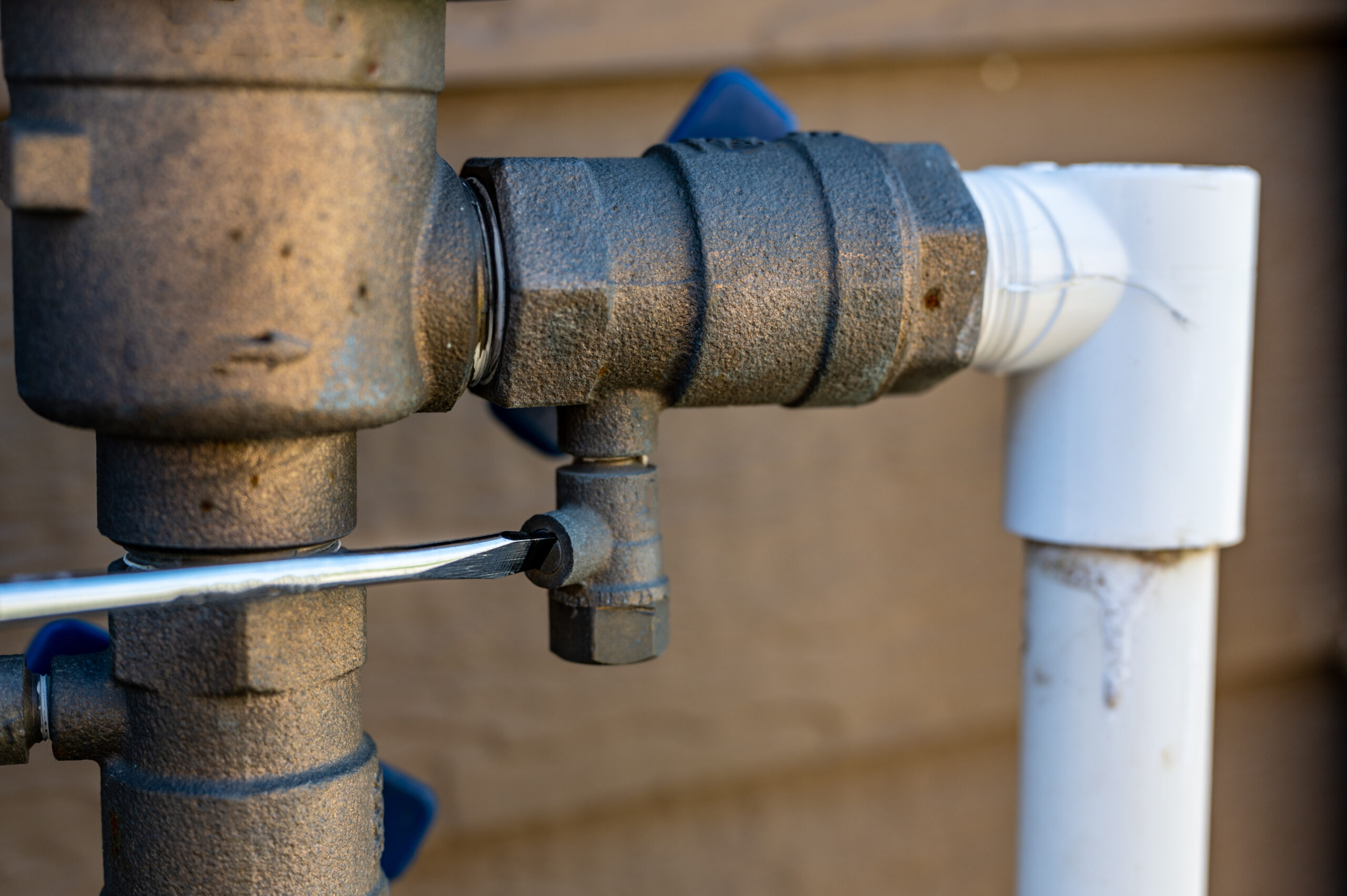
Backflow Preventers – Protect water supply from contamination, required by code for all irrigation systems including drip.
Stakes and Anchors – Secure tubing in place, preventing movement and maintaining proper emitter positions.
Professional Drip System Design
Effective drip irrigation requires thoughtful design. We evaluate plant types, sizes, and water requirements to determine appropriate emitter numbers and flow rates for each plant. Larger shrubs need multiple emitters spaced around their root zones, while small perennials may share emitters.
Zone layout groups plants with similar water needs and sun exposure. Shade plantings require different schedules than full-sun beds, and we create zones that allow proper timing for each area’s conditions.
We calculate zone flow rates ensuring systems don’t exceed available water supply. Unlike spray irrigation where all heads in a zone run simultaneously, drip systems can often cover larger areas within available flow constraints because total GPM demand is lower.
Layout planning considers current plant sizes and anticipated growth. Drip lines should accommodate mature plant spreads, not just new plantings. Strategic emitter placement serves plants now while providing adequate coverage as they grow.
Installation Methods
Quality installation ensures reliable long-term performance. We bury mainline tubing 4-6 inches deep, protecting it from surface damage and UV exposure. Mainlines are laid in continuous runs when possible, avoiding unnecessary joints that could leak.
Distribution tubing and emitters are typically laid on the soil surface in planting beds and covered with mulch. This allows easy inspection and adjustment while protecting lines from sun damage. Emitters are positioned at appropriate distances from plant bases—not right against stems where they could cause rot.
All connections use proper fittings designed for drip irrigation. We avoid kinked lines that restrict flow and ensure tubing follows gentle curves rather than sharp bends that can cause failures.
Systems are thoroughly tested before covering with mulch. We verify proper flow from all emitters, check for leaks, and ensure pressure regulators and filters are functioning correctly. This thorough testing prevents problems that would require excavation to correct.
Drip System Maintenance
While drip irrigation is low-maintenance compared to spray systems, some attention keeps it operating optimally:
Filter Cleaning – Filters accumulate debris and require periodic cleaning. Most homeowners can handle this simple maintenance by disassembling filter housings and rinsing screens.
Emitter Inspection – We recommend checking emitters periodically for clogs or damage. Most clogs can be cleared by removing and cleaning emitters. Damaged emitters should be replaced.
Pressure Checks – Verifying proper system pressure ensures consistent emitter output. Pressure regulators may need adjustment or replacement over time.
Winterization – In areas that freeze, drip systems need proper winterization to prevent damage. While rare in most of Florida, northern areas may require this service.
We offer maintenance services that include system inspection, filter cleaning, emitter testing, and any necessary adjustments or repairs.
Converting Spray Zones to Drip
Many landscape beds currently irrigated with spray heads benefit from conversion to drip irrigation. We can retrofit existing zones, using the same valve and wiring while replacing spray heads with drip manifolds.
Conversions often pay for themselves through water savings within 2-3 years while providing better plant health and reduced maintenance. We evaluate existing systems and provide estimates for cost-effective conversions.
Combining Drip with Spray Irrigation
Complete irrigation systems often include both spray and drip zones, using each method where it performs best. Lawns continue using spray or rotary heads while planting beds convert to drip. This combination approach optimizes water efficiency while providing appropriate irrigation for all landscape areas.
Transform your landscape’s water efficiency with professionally designed and installed drip irrigation that conserves resources while promoting optimal plant health.