Retaining walls solve grade challenges while adding structure, visual interest, and usable space to your property. Our professional retaining wall installation services combine engineering expertise with design skill to create walls that are both functional and attractive.
Purpose and Benefits of Retaining Walls
Retaining walls serve essential functions on properties with slopes or grade changes. They hold back soil, preventing erosion and creating level areas where none existed before. This transforms unusable sloped areas into functional spaces for patios, lawns, gardens, or play areas.
Beyond creating usable space, retaining walls protect property from soil erosion and drainage problems. They prevent soil from washing down slopes during heavy rains, which can damage foundations, walkways, and lower landscape areas. Well-designed retaining walls channel water appropriately while stabilizing slopes.
Retaining walls also add dimension and visual interest to landscapes. They create terraced gardens, define spaces, and provide opportunities for cascading plants and creative design elements. Multiple wall levels can turn challenging slopes into stunning landscape features with layers of plantings and different use areas.
Design Considerations
Effective retaining wall design requires understanding soil conditions, drainage patterns, and the forces acting on the wall. We evaluate your property’s specific conditions, including soil type, water movement, and height of the slope to retain. These factors determine wall type, construction methods, and drainage requirements.
Height significantly impacts wall design. Walls under 3-4 feet often work with gravity wall systems, while taller walls may require reinforcement. Very tall walls sometimes need engineering certification. We design appropriate solutions based on your specific situation, ensuring safety and longevity.
Aesthetic design integrates retaining walls with your overall landscape. We consider material colors and textures that complement your home and existing hardscapes. Wall layout follows natural contours when possible, creating flowing lines that feel organic. We plan for planting areas, cap designs, and how walls transition to other landscape features.
Material Options
Different retaining wall materials suit different applications, budgets, and aesthetics:
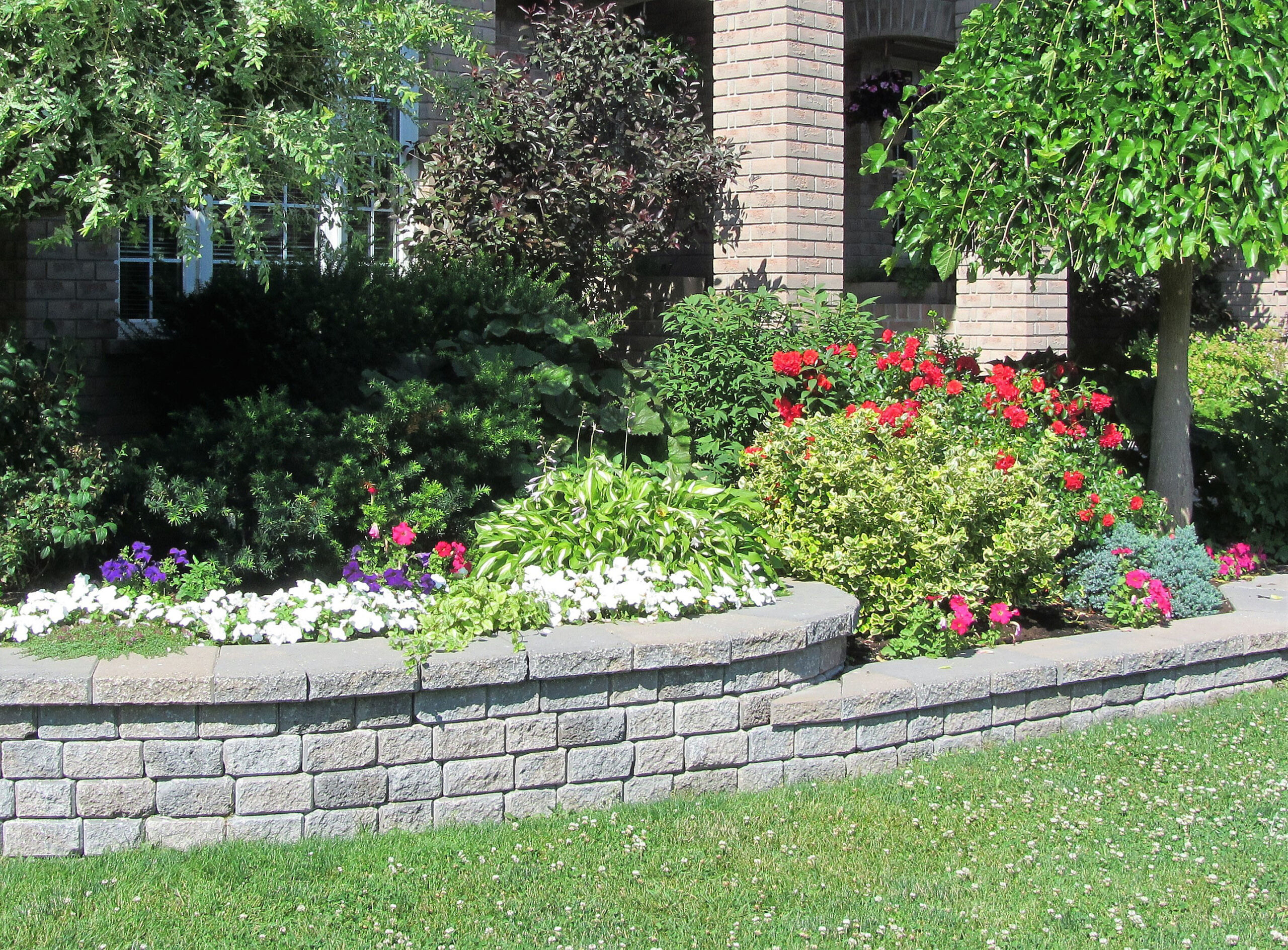
Segmental Block – Interlocking concrete blocks provide excellent strength and durability while offering various colors and textures. These modular systems install relatively quickly and work well for walls of various heights. Modern segmental blocks mimic natural stone appearance while providing engineering-tested performance.
Natural Stone – Stacked stone walls offer timeless beauty and organic character. Large fieldstone or cut stone creates walls with natural variation and rustic charm. Natural stone works beautifully in traditional and naturalistic landscapes, aging gracefully over time.
Poured Concrete – Provides maximum strength and flexibility for custom shapes and heights. Concrete walls can be finished in numerous ways—smooth, textured, veneered with stone, or stamped to resemble other materials. They’re ideal for tall walls or situations requiring maximum structural capacity.
Timber – Pressure-treated or naturally rot-resistant woods create walls with warm, natural appearance. Timber works well for shorter walls in informal settings and can be more economical than masonry options.
We recommend materials based on your wall’s height and purpose, your aesthetic preferences, budget, and site conditions. Each material has ideal applications where it excels.
Proper Drainage and Construction
Drainage is critical for retaining wall longevity and performance. Water pressure behind walls can cause failure, so we install proper drainage systems during construction. This includes drainage aggregate behind walls, perforated pipe that carries water away, and weep holes that allow water to escape.
Foundation preparation provides stable bases that won’t shift or settle. We excavate to appropriate depths, install compacted bases, and start walls properly to ensure long-term stability. For taller walls, we may install geogrid reinforcement that extends into the soil behind the wall, providing additional strength.
Proper backfill using appropriate materials prevents settlement and provides drainage. We compact backfill in lifts, ensuring density without placing excessive pressure on walls during construction. These invisible details determine whether walls remain stable for decades or require repair within years.
Terraced Walls and Multi-Level Systems
Complex slopes often benefit from multiple shorter walls rather than one tall wall. Terraced systems create level planting areas between walls, reduce the structural demands on individual walls, and create more visually interesting landscapes.
We design terrace spacing that provides adequate room for plantings while ensuring proper structural performance. The result is landscape layers that add dimension and provide opportunities for varied plantings at different levels.
Integration with Landscape Design
Retaining walls should feel intentional within your overall landscape rather than appearing as afterthoughts. We coordinate wall placement with patios, walkways, and planting beds. Strategic plantings soften wall faces and tops, blending hardscape and landscape elements naturally.
Lighting integrated into or near retaining walls provides safety while creating dramatic nighttime effects. Cap lights or low-voltage fixtures positioned near walls highlight textures and create ambiance in outdoor living areas.
Maintenance and Longevity
Quality retaining walls require minimal maintenance but benefit from occasional inspection. We check for any signs of movement, clean weep holes to ensure proper drainage, and verify that backfill hasn’t settled. Minor adjustments made early prevent major problems later.
Properly designed and built retaining walls last for decades with minimal attention. Our construction methods exceed typical residential standards, ensuring your investment provides long-term value.
Building Codes and Engineering
Retaining walls above certain heights require permits and may need engineering stamps. We handle all necessary permitting and work with engineers when required, ensuring your wall meets local building codes and safety standards.
Transform sloped, unusable areas into functional, beautiful spaces with professionally designed and installed retaining walls that provide lasting stability and style.